
Sourdough Starter Calculator
Calculate feeding amounts and plan your starter schedule for baking day.
Planning a dough? The Inoculation Calculator shows how much starter to use and what it does to bulk time and flavor.
Calculate Feeding Amounts
Include extra for waste (usually 20-50g more than recipe calls for)
Peak times assume a kitchen around 75-78F (24-26C). A colder kitchen runs slower, a warmer one faster.
Feed your starter with:
67g
Starter
67g
Flour
67g
Water
Total: 201g of mature starter
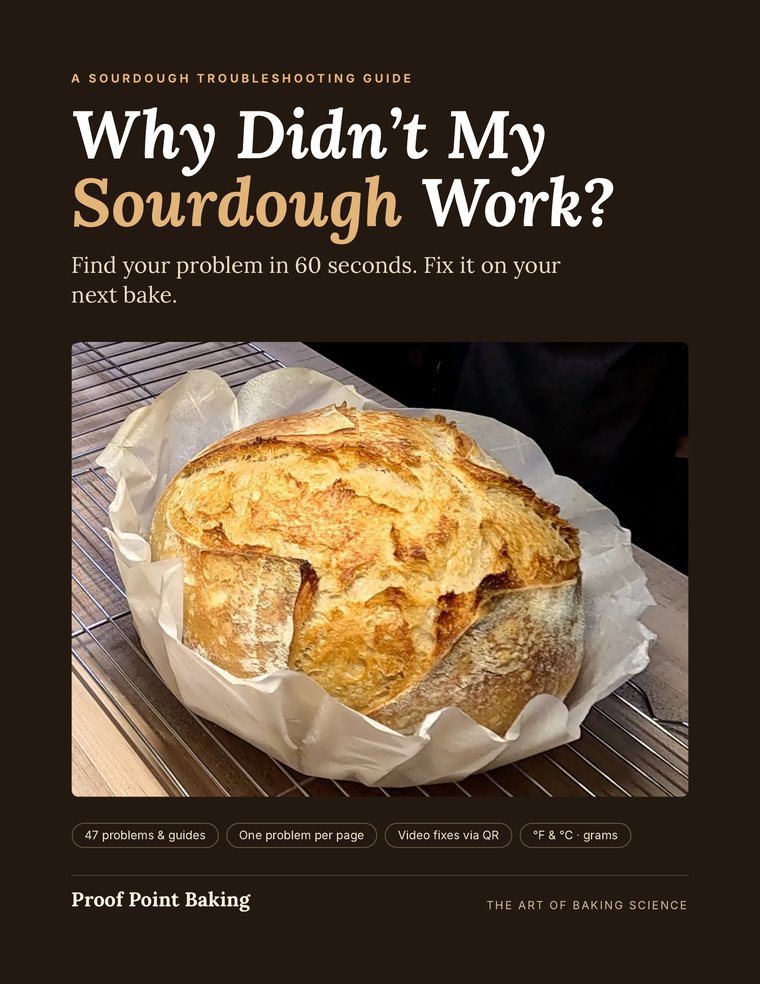
Loaf not turning out?
Why Didn't My Sourdough Work?
A 71-page troubleshooting guide. Find your problem in 60 seconds and fix it on your next bake.
Understanding Feeding Ratios
Feeding ratios are expressed as starter : flour : water. For example, a 1:5:5 ratio means for every 1 part of starter, add 5 parts flour and 5 parts water by weight.
- 1:0.5:0.5 - Super fast (2-3 hours at room temp). For same-day bakes when time is short. The quickest peak, and the most sour flavor.
- 1:1:1 - Fast fermentation (4-6 hours at room temp). Good for frequent baking.
- 1:2:2 - Moderate pace (6-8 hours). Common for daily feeding.
- 1:3:3 - Slower fermentation (8-10 hours). A good middle ground when 1:2:2 peaks before you're ready, or for a milder flavor.
- 1:5:5 - Slower still (10-12 hours). Less waste, good for overnight feeds and less frequent baking.
- 1:10:10 - Very slow (12-24 hours). Ideal for overnight levain builds.
Tips for a Healthy Starter
- •Feed your starter when it has peaked and starts to fall - usually when it has doubled in size.
- •Use a consistent flour for predictable results. Whole grain flours ferment faster than white flour.
- •Temperature affects fermentation speed. Warmer = faster, cooler = slower.
- •Use filtered or bottled water if your tap water is heavily chlorinated.
- •Store unused starter in the fridge and feed once a week if not baking regularly.