
Same-Day Sourdough Batard (No Cold Proof!)
A crispy, open-crumbed batard from start to finish in one day. No overnight wait required.
Instructions
- 1
FEED YOUR STARTER: Combine 50g starter, 50g bread flour, and 50g room temperature water in a clean jar. Stir vigorously until fully combined with no dry flour remaining. Mark the jar with a rubber band or tape so you can track the rise. Set aside at room temperature for 4 to 6 hours. Your starter is ready when it has at least doubled, looks domed and bubbly on top, and smells pleasantly tangy and yeasty. That dome is your green light to mix!
- 2
MIX THE DOUGH: Add 360g room temperature water and 120g of your active, bubbly starter to a large bowl. Stir well until the starter is fully dissolved into the water. The water will look slightly milky and foamy. Add 10g salt and stir again until dissolved. Now add all 500g of bread flour at once. Use a silicone spatula to mix everything together until you have a shaggy dough with no dry flour remaining. It will look rough and scraggly right now and that is completely normal. Cover the bowl and let it rest for 30 minutes before your first stretch and fold.
- 3
STRETCH AND FOLDS + ROOM TEMP BULK FERMENT: Over the next 3 to 4 hours, you will perform 3 sets of stretch and folds, all at room temperature. For each set, grab one side of the dough, stretch it up as high as it will go without tearing, then fold it over to the opposite side. Rotate the bowl 90 degrees and repeat 3 more times so you have completed a full round. That is one set. Perform Set 1 at the 30-minute mark. Set 2 at the 1-hour mark. Set 3 at the 1.5-hour mark. After the third set, leave the dough alone to ferment for the remaining time. By the end of bulk ferment, the dough should feel pillowy and alive, have grown noticeably (about 50 to 75 percent), and jiggle gently like set custard when you shake the bowl. You will also see bubbles on the sides and surface. Those are signs that fermentation is doing its job and your dough is ready to shape.
- 4
FINAL SHAPE INTO BANNETON: Generously flour an oval banneton with rice flour or a mix of rice and all-purpose flour. Lightly flour your work surface and turn the dough out gently. Because this dough has fermented at room temperature the whole time, it is already relaxed and extensible, which makes shaping straightforward. Stretch the dough out into a large rectangle using your fingertips, working gently so you keep some of those bubbles intact. Fold the long sides in toward the center, then roll the dough tightly from the top down toward you, using your hands to tuck and drag the bottom edge along the counter to build surface tension. You want a smooth, taut oval shape. Place the dough seam-side up into your prepared banneton, dust a little extra flour over the top, and cover with a clean kitchen towel or plastic wrap.
- 5
PROOF AT ROOM TEMPERATURE: Leave the shaped dough in the banneton at room temperature for 1.5 to 2 hours. The dough is ready to bake when it has nearly doubled in size, feels puffy and full of air when gently pressed, and a finger poke leaves an indent that springs back slowly but not all the way. That slow spring-back is your cue that the dough is proofed and ready for the oven. While the dough proofs, start preheating your oven so it is fully hot and ready when you are.
- 6
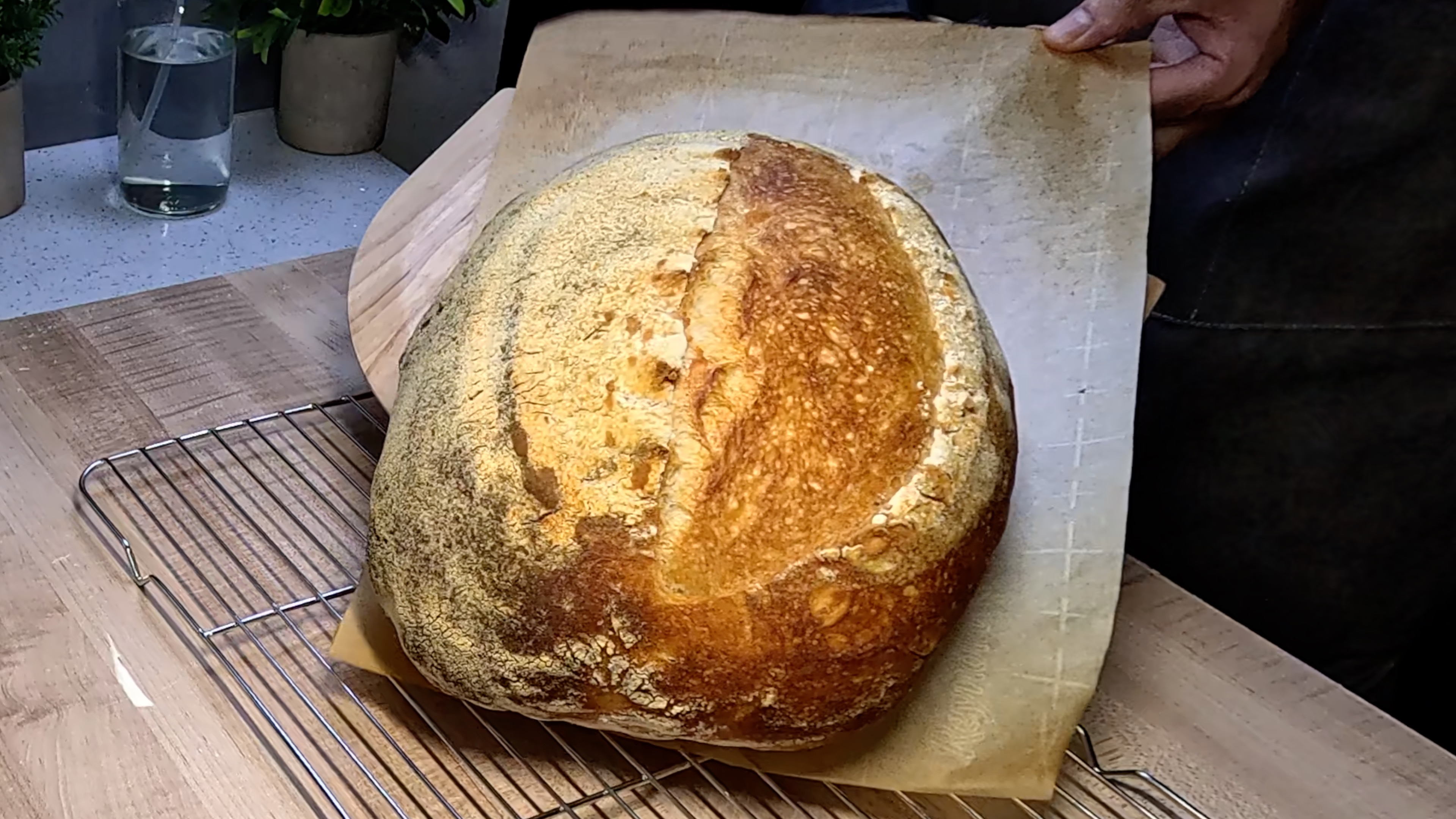
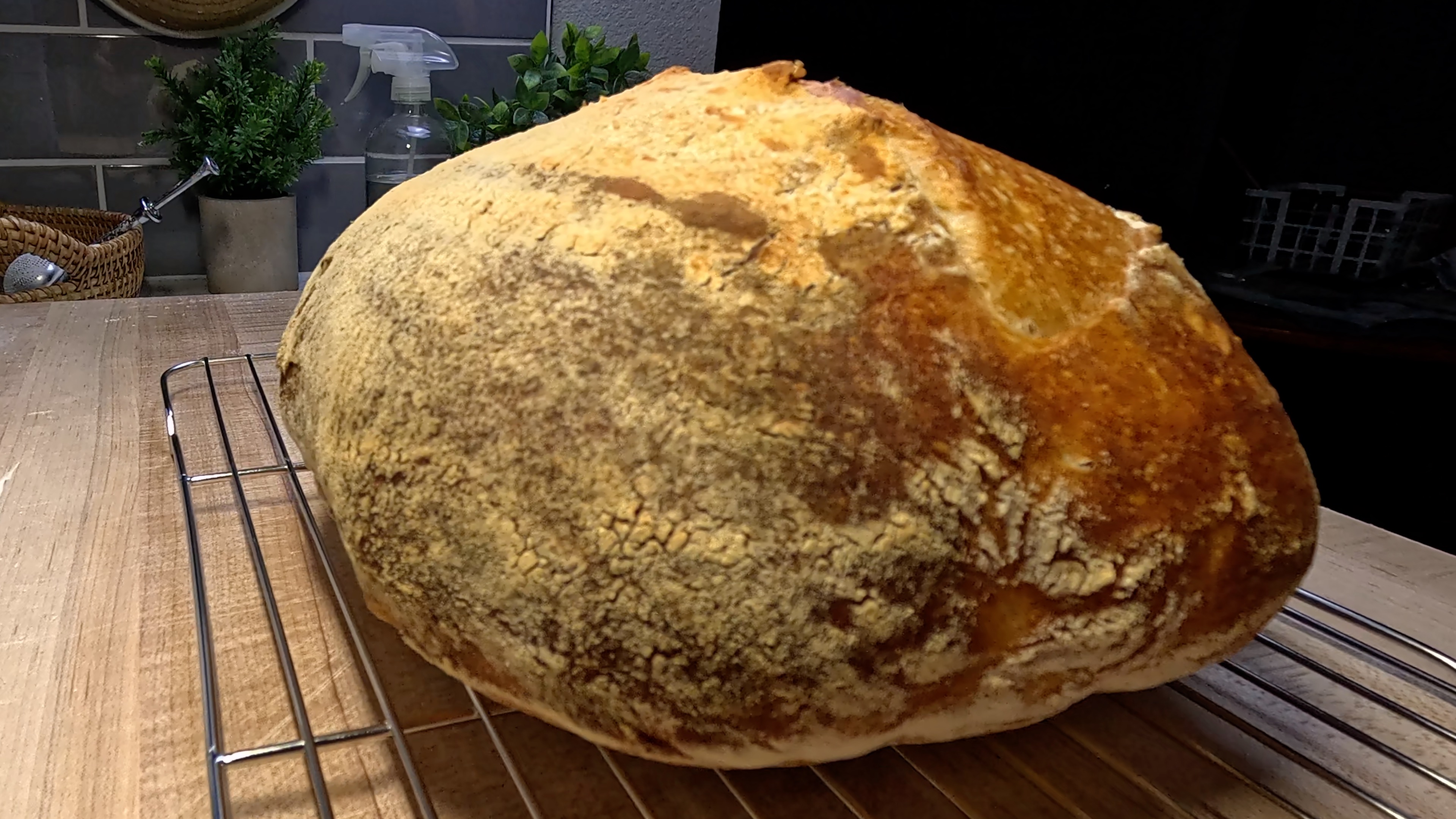
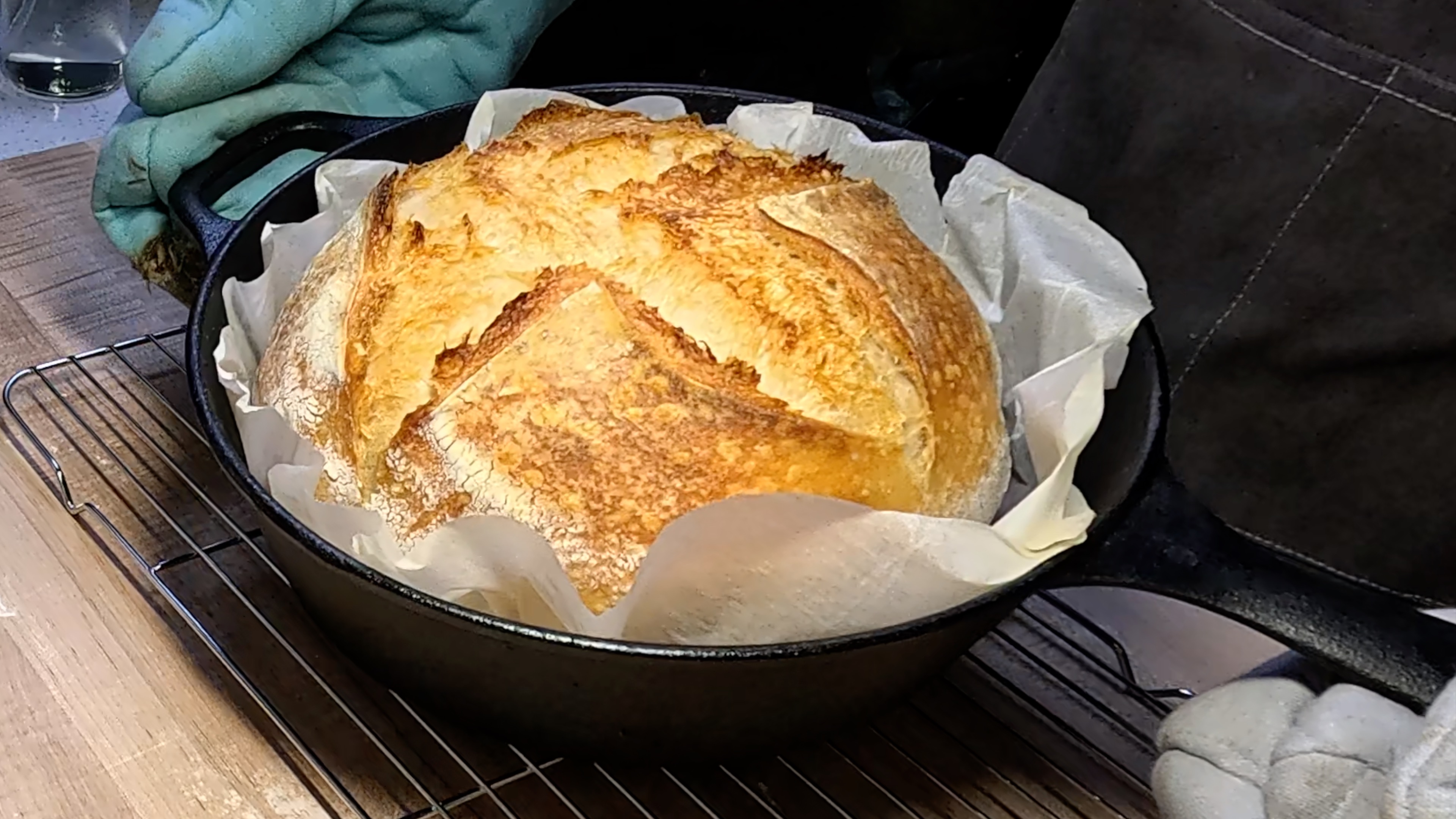
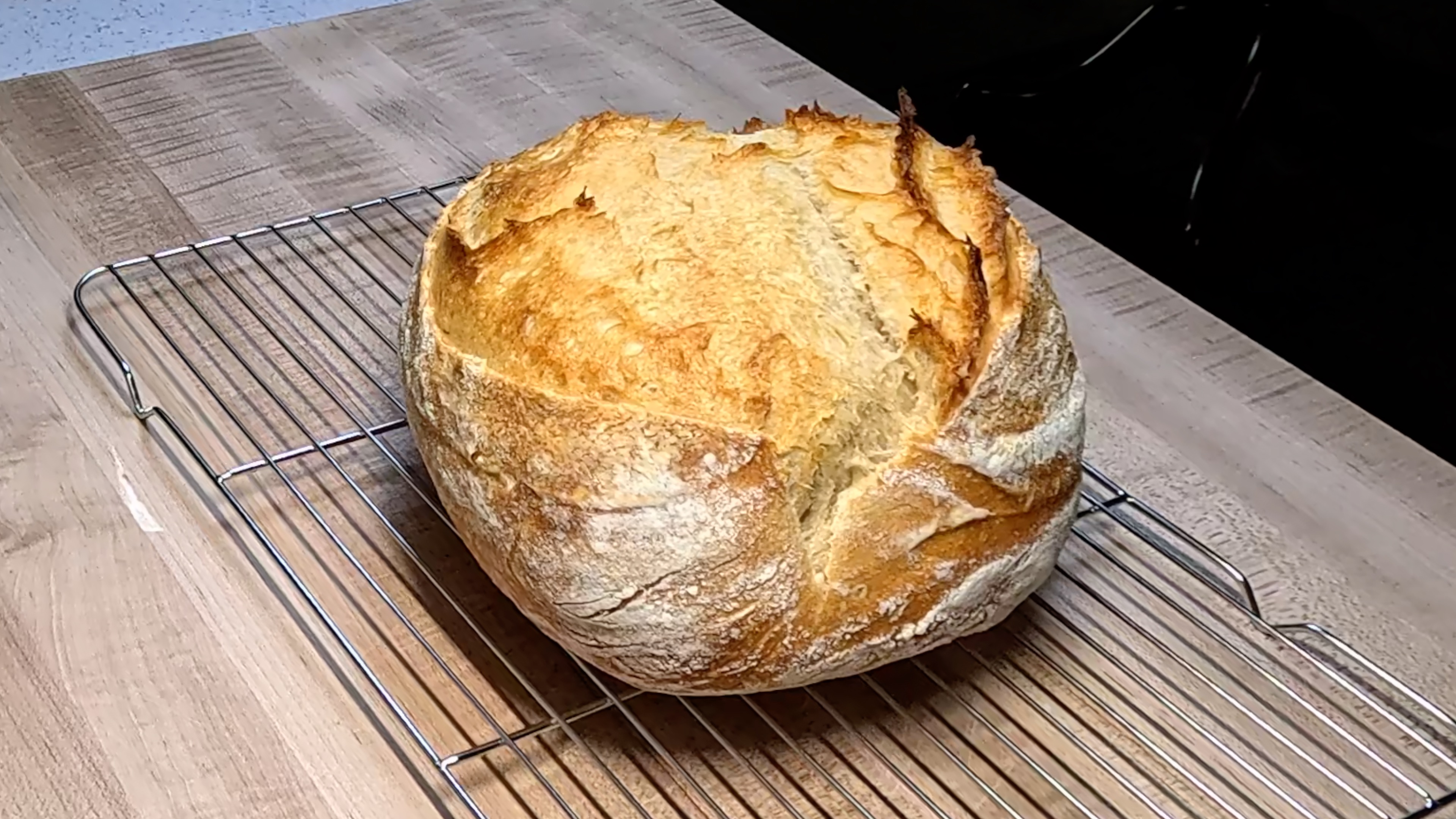
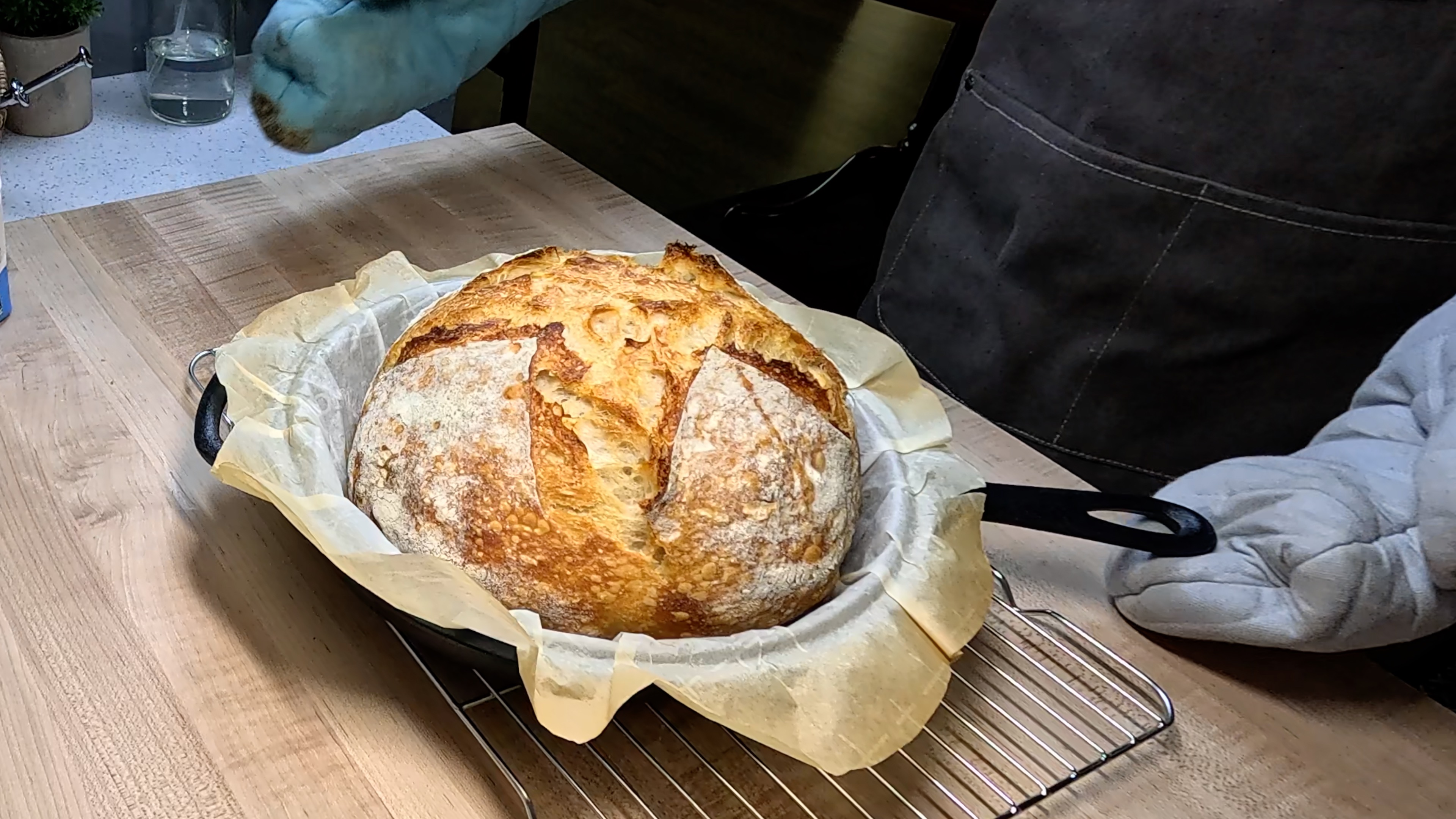
PREHEAT, SCORE, AND BAKE: About 45 to 60 minutes before baking, place your baking stone on the middle rack and a shallow metal pan on the rack below. Preheat your oven to 500F (260C) and let everything get screaming hot. When the dough is proofed and the oven is ready, carefully turn the dough out of the banneton onto a piece of parchment paper, seam-side down. Using a lame or sharp razor blade, score the dough with one confident slash down the center at a slight angle, about 1/2 inch deep. Work quickly and decisively. Slide the parchment onto the baking stone. Pour about 1 cup of boiling water into the metal pan below to create a burst of steam, then quickly close the oven door. Bake at 500F with steam for 15 minutes. Remove the steam pan, drop the temperature to 450F (230C), and bake for another 30 to 35 minutes until the crust is deep mahogany brown and the loaf sounds hollow when tapped on the bottom. Transfer to a wire rack and let it cool for at least 1 hour before slicing. That cooling time is not optional. The interior is still setting up as steam escapes, and cutting too early will give you a gummy crumb. You made it. Same day and absolutely worth it.
Baker's Tips
- •Same-day baking works best when your starter is very active and your kitchen is between 72 and 78F.
- •Rice flour in the banneton is a game changer. It virtually eliminates sticking.
- •If your dough feels very slack and hard to shape, do a gentle pre-shape, let it rest 10 minutes uncovered, then do your final shape.
- •Steam in the first phase of baking is what allows the loaf to expand freely before the crust sets. Do not skip it.
- •A digital kitchen scale is non-negotiable for consistent results. Volume measurements will let you down.
More Like This
Baker's Toolkit
Tools and ingredients we recommend for this recipe
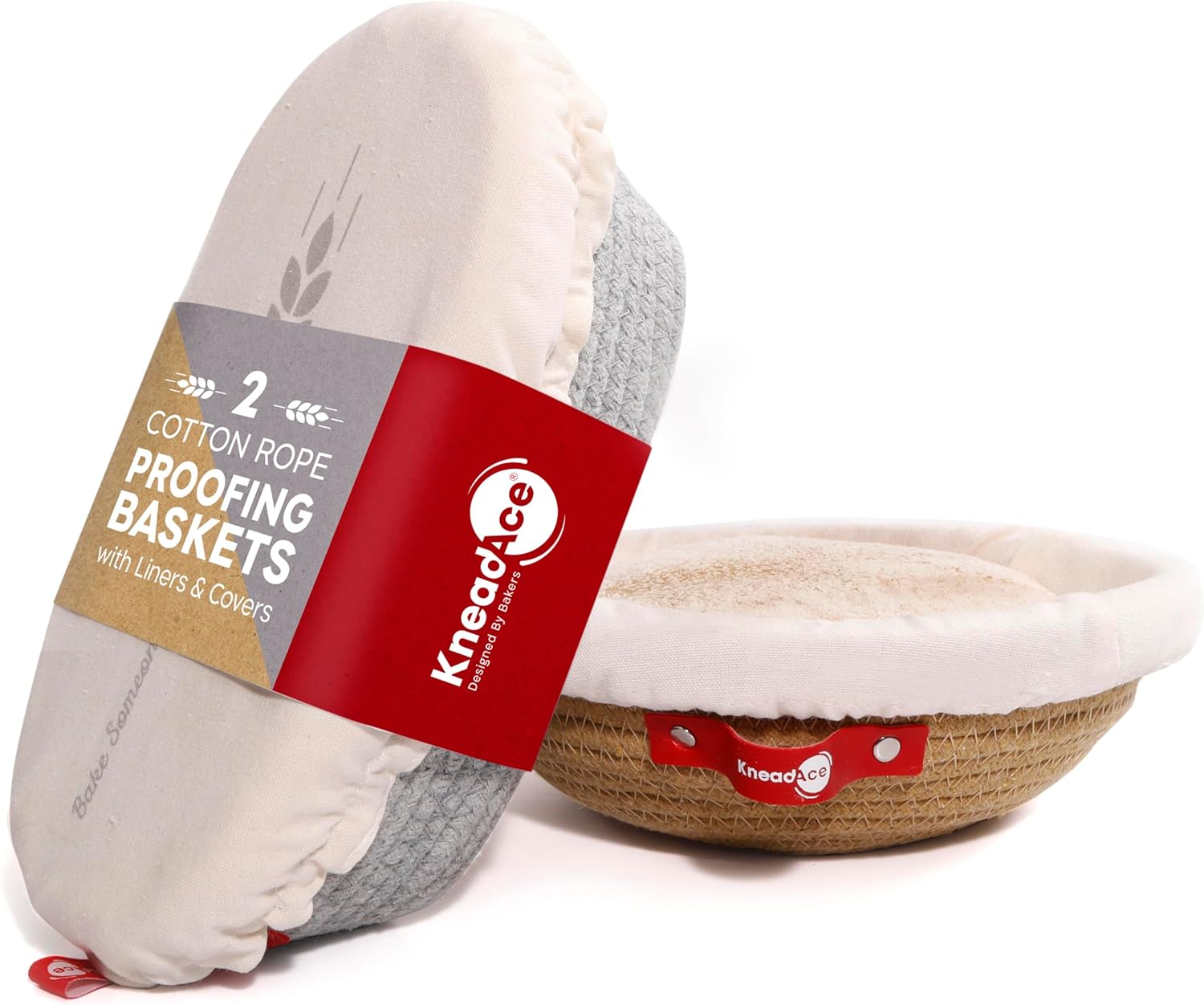
KneadAce Cotton Rope Banneton Bread Proofing Basket Set, Oval & Round Bread Baskets with Liners & Covers
View product
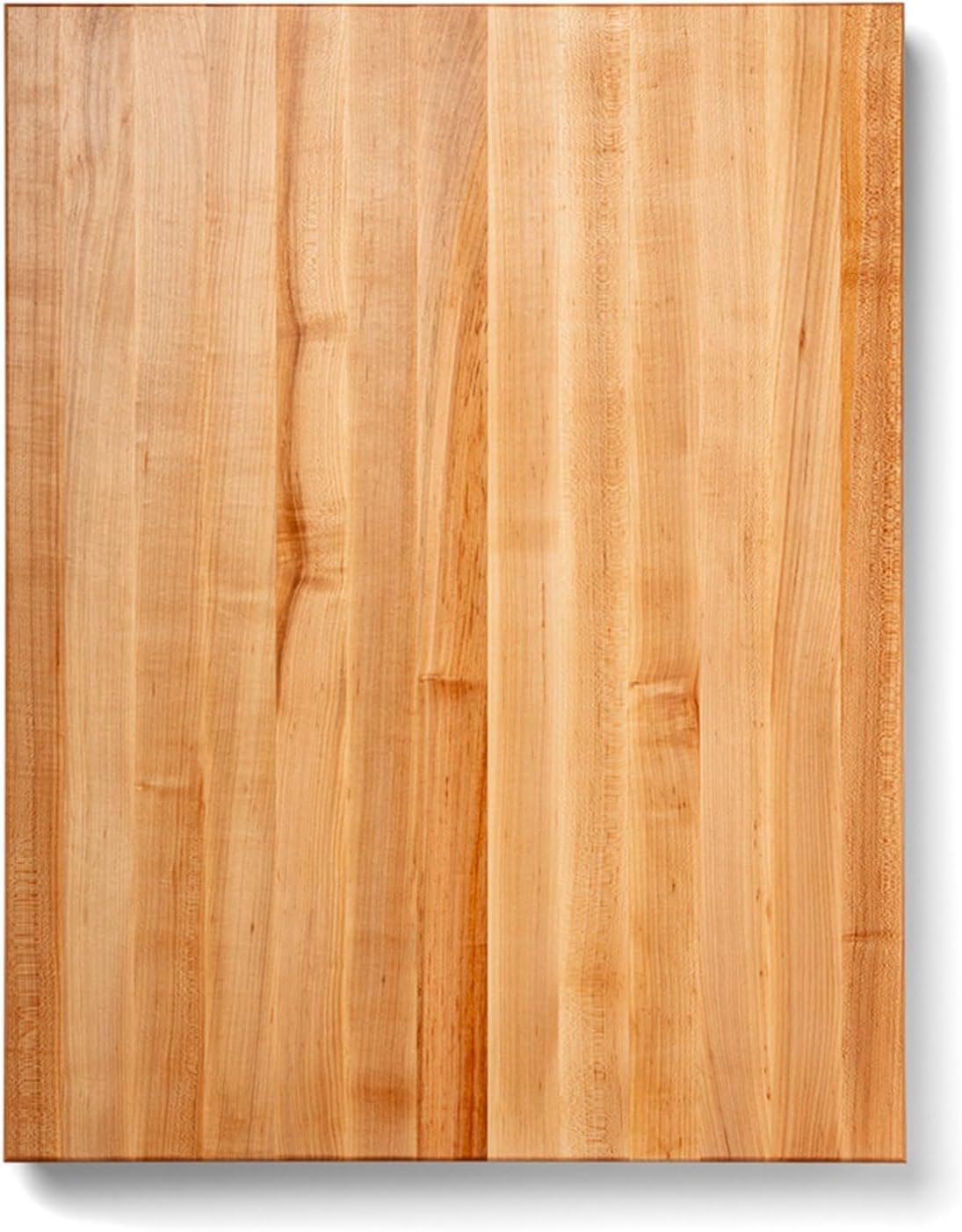
John Boos RA-Board Series Rectangular Wooden Maple Cutting Board 30”x23.25” – 2.25” Thick
View product
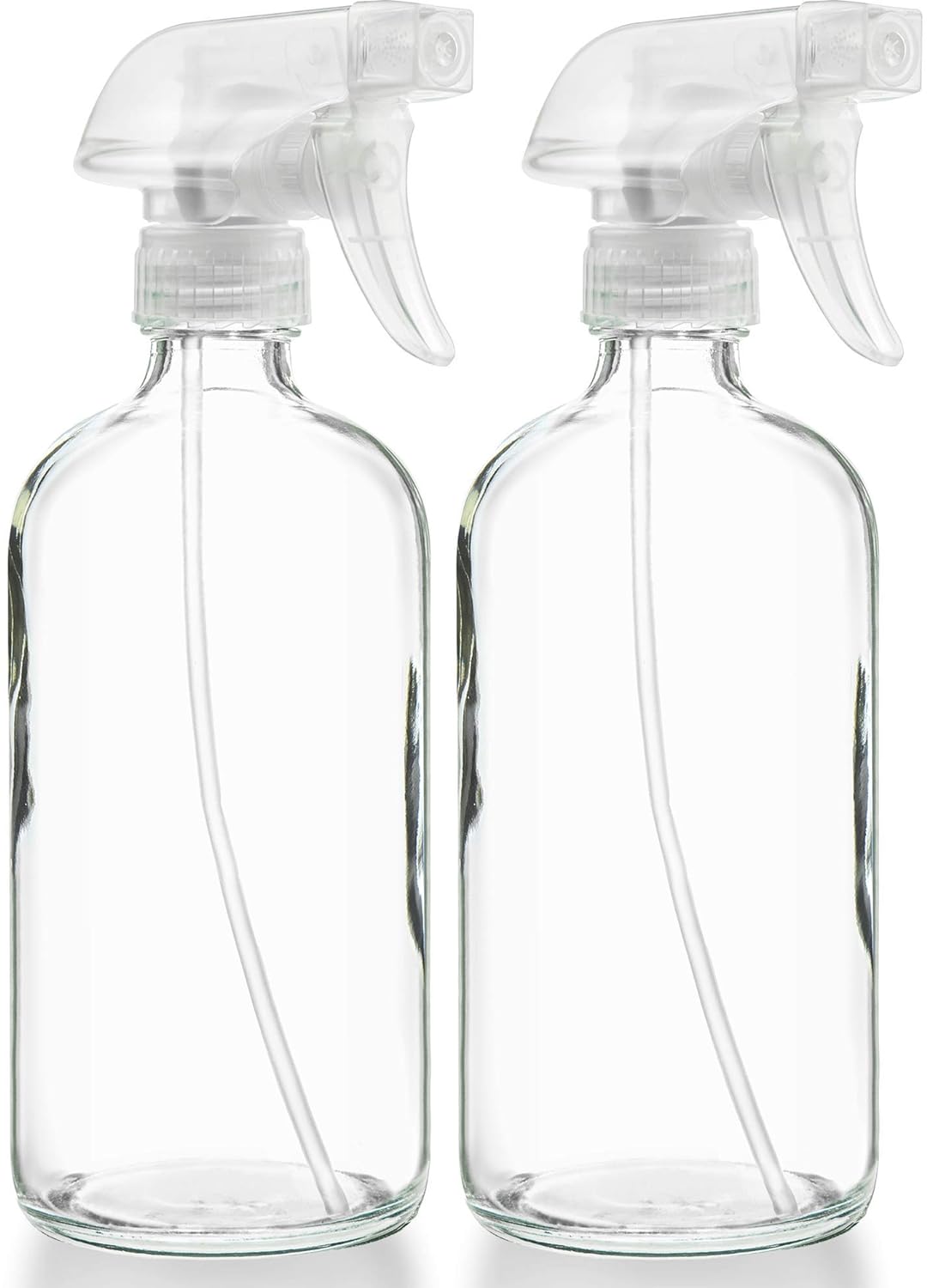
Sally's Organics® Empty Clear Glass Spray Bottles - Refillable 16 oz
View product
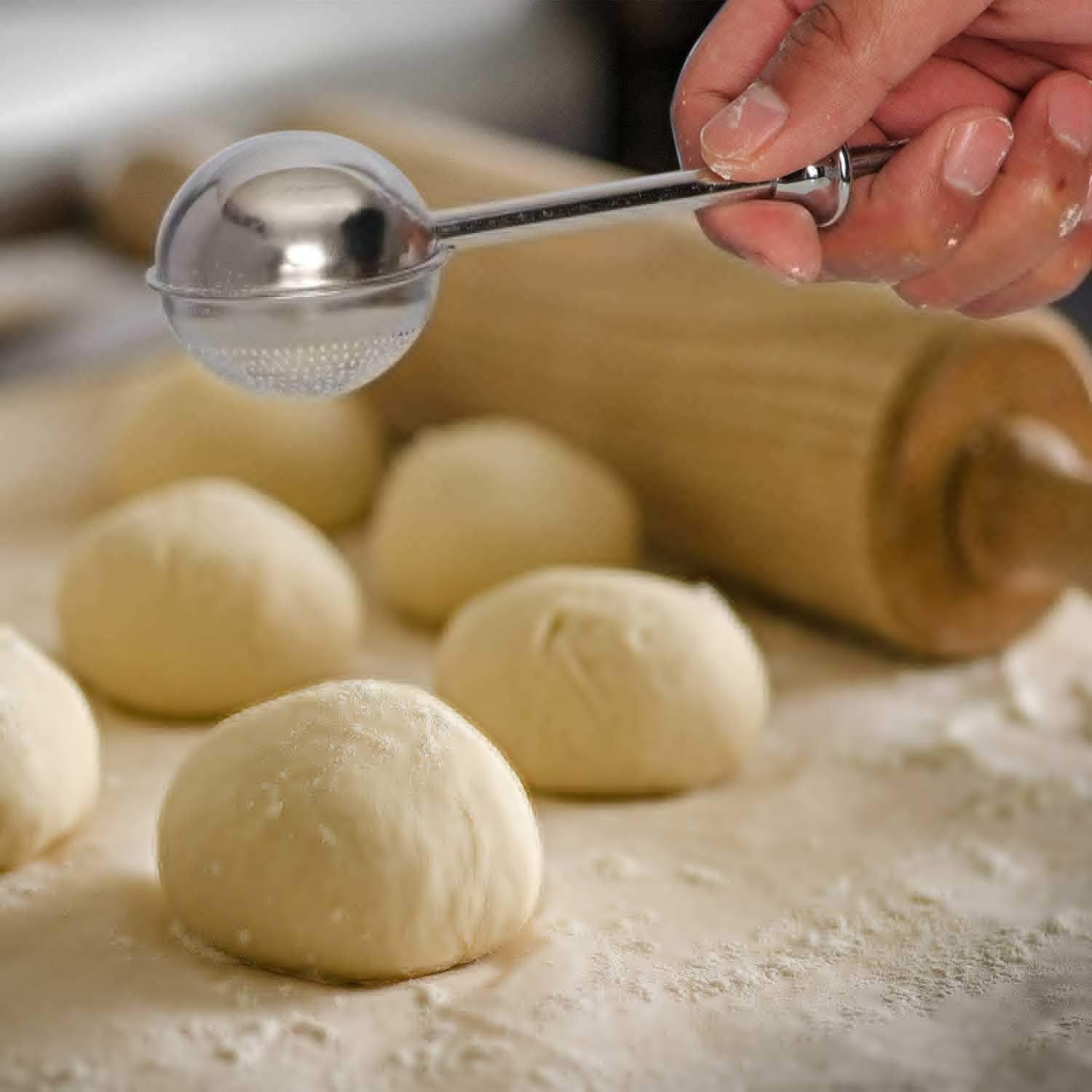
HULISEN Flour Duster for Baking, One-Handed Operation, 304 Stainless Steel Powdered Sugar Shaker Duster
View product
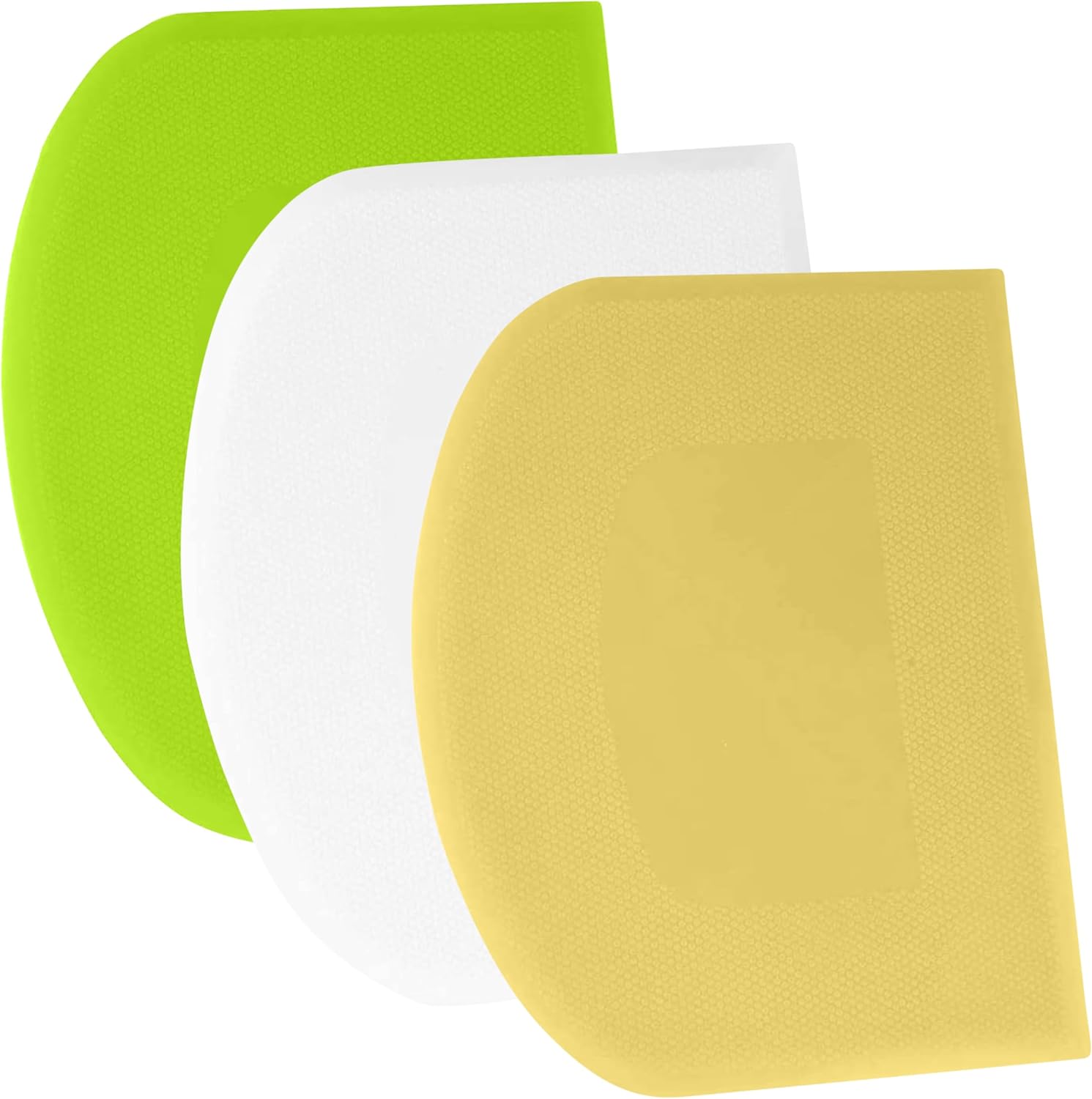
SURDOCA Dough Scraper Bench Scraper - 3P 4.7x3.7" Plastic Flexible Bowl Scraper
View product

PIZZA STONE | Rectangular Pizza Stone For Oven Baking
View product
Comments
Sign in to join the conversation
Sign In